

Application context
Outdoor telecom and 5G cabinets operate through cool nights, humid mornings, wind-driven rain, and rapid temperature changes. Metal surfaces and equipment can fall below the dew point, causing moisture to form inside a cabinet even when the door gasket remains intact.
This representative solution is intended for telecom cabinets where condensation causes corrosion, intermittent communication faults, or recurring maintenance visits. It is not a report of a specific customer project. Final product selection depends on cabinet dimensions, climate, power, and measured conditions.
Conditions to verify before selection
- Internal and external temperature cycle
- Maximum relative humidity during the wet season
- Cabinet dimensions, material, insulation, and mounting method
- Internal heat load from communication and power equipment
- Existing gasket, cable-entry, vent, and drainage condition
- Available AC or DC voltage and circuit capacity
- Requirement for local control, remote alarms, or RS485
- Service access and maintenance interval
Recommended NOXT configuration
| Function | Recommended product family | Role in the application |
|---|---|---|
| Remove internal moisture | CZCS 345, CZCS 1000, CZCS 1000A, or CSSU 120 | Semiconductor dehumidification for sealed telecom cabinets |
| Protect cold surfaces | HG 140 or HG 340 heater | Raises internal temperature and reduces dew-point risk |
| Control temperature and humidity | ETF 012 or ETY 031 controller | Automates heating and dehumidification using measured conditions |
| Monitor and alarm | RS485-compatible controller option | Supports remote visibility and alarm signaling |
| Optional ventilation | TB 98/TB 99 filter fan | Used only when filtered air exchange is acceptable |
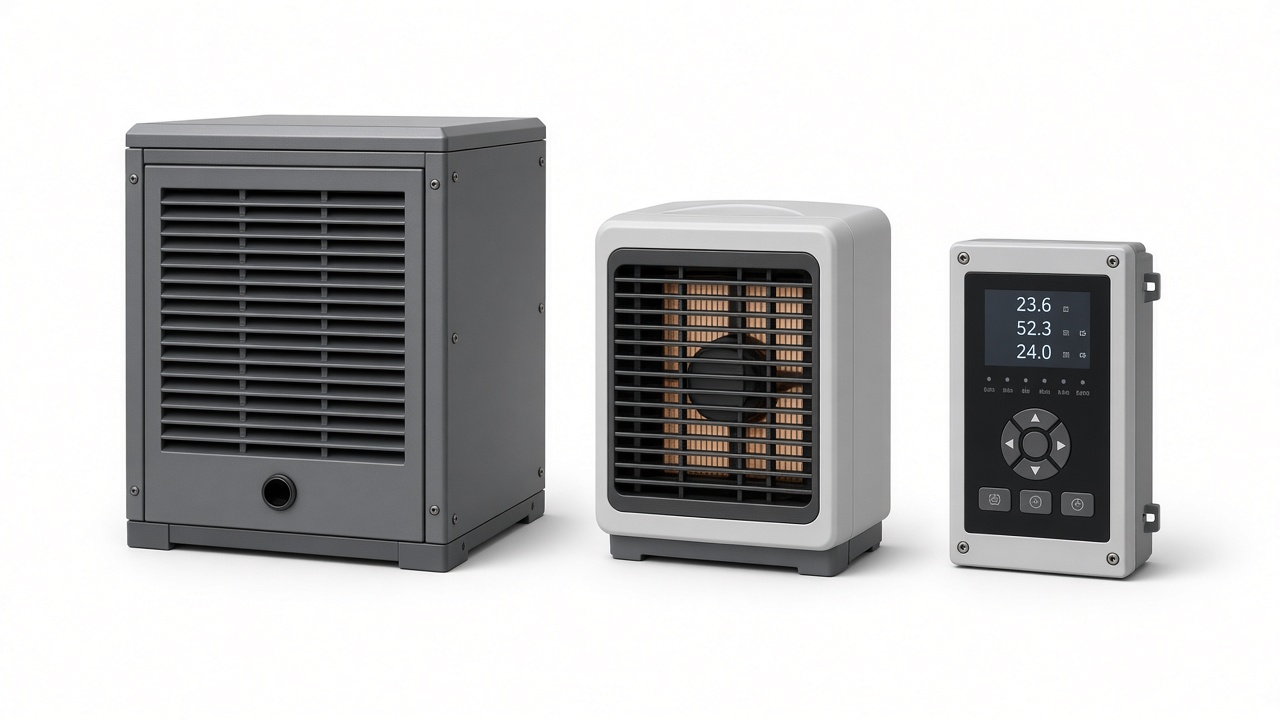
Why this combination works
A dehumidifier lowers the amount of moisture in the cabinet air. A heater raises the temperature of cold surfaces that would otherwise fall below the dew point. The controller coordinates both actions and prevents unnecessary operation.
For example, heating may activate during a cool night while dehumidification handles moisture that entered through cable glands or remained in the cabinet after installation.
The best balance depends on the actual dew-point relationship. Using heating and dehumidification together without control logic can waste energy or create unstable conditions.
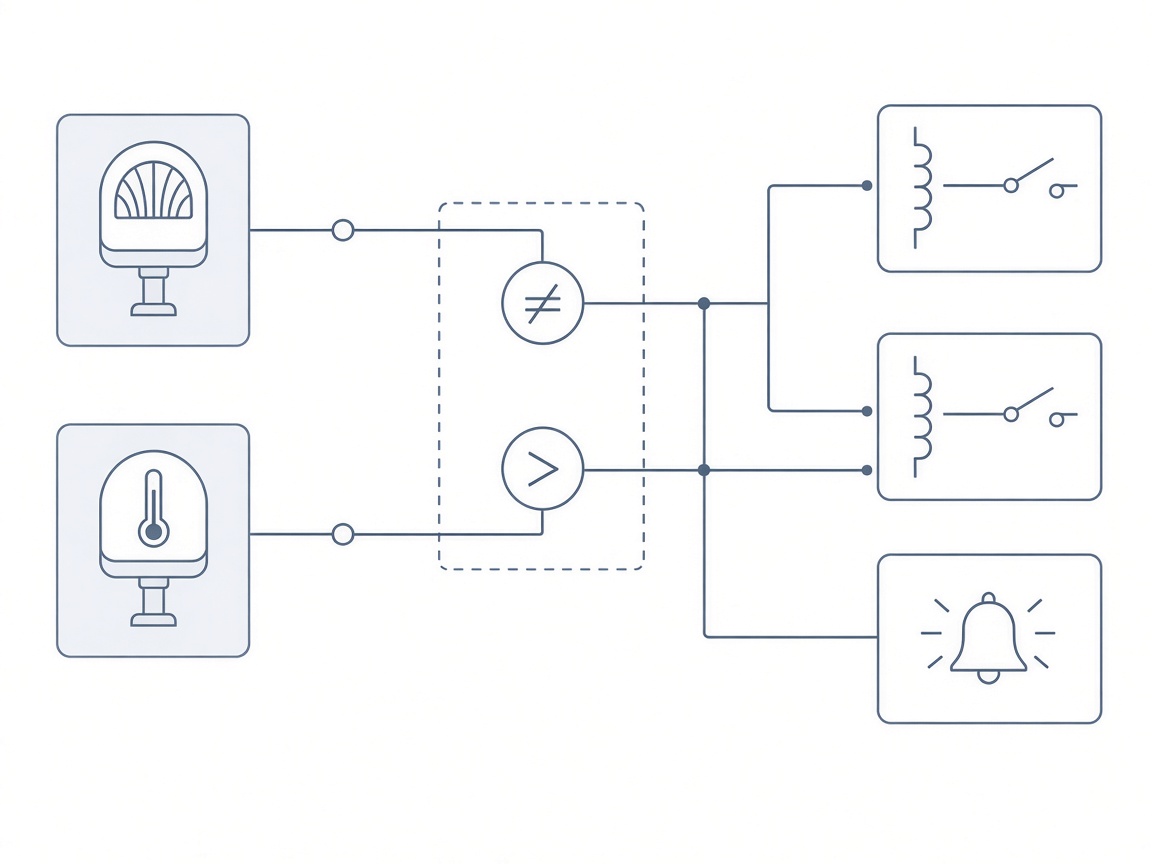
Recommended control logic
- Dehumidification starts when relative humidity exceeds the selected threshold.
- Heating starts when cabinet temperature falls below the minimum setpoint.
- A second heating threshold may be used when humidity remains high and surface temperature is close to the dew point.
- Alarms activate if humidity remains high, temperature falls below the lower limit, or the dehumidifier does not respond.
- Event data is reviewed after seasonal changes to adjust setpoints.
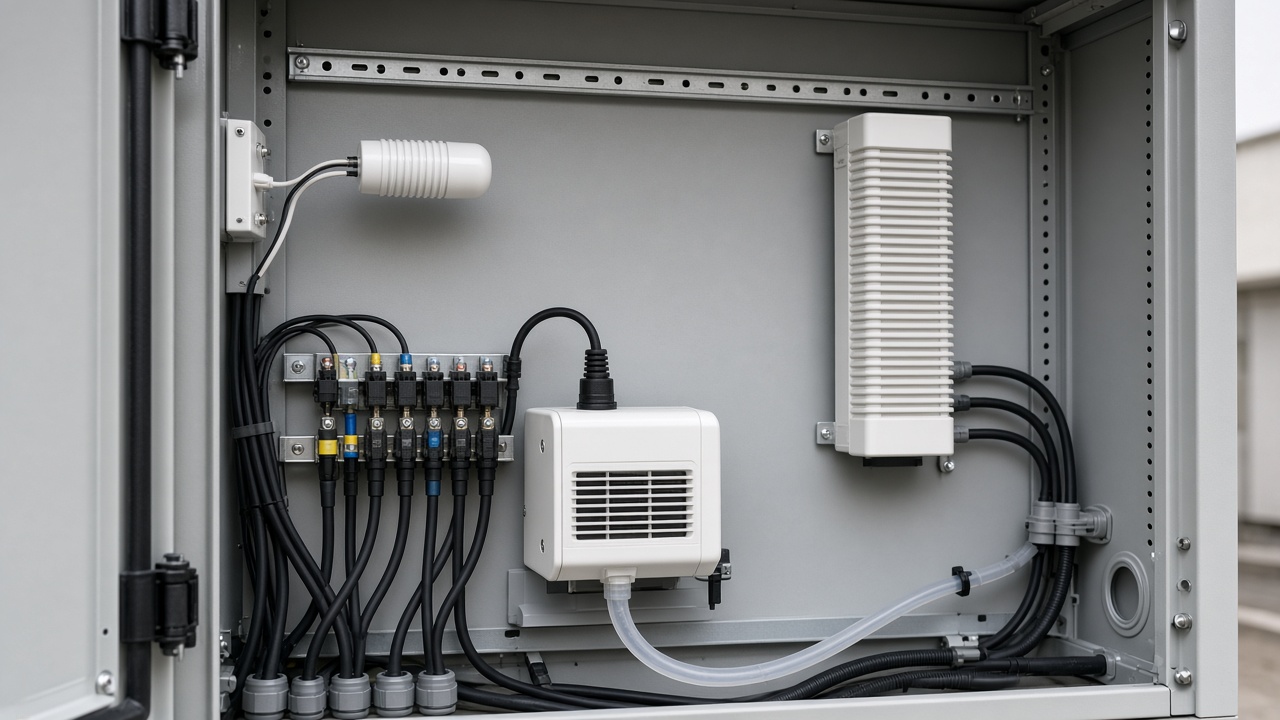
Installation notes
- Mount the humidity sensor where it represents the air around critical equipment, not next to the heater or dehumidifier outlet.
- Keep the dehumidifier drain line clear and route it away from cable connections.
- Maintain the required safety clearance around the heater.
- Seal unused cable entries after installation.
- Confirm relay capacity and control voltage before connecting heating and dehumidification loads.
- Record thresholds and alarm logic in the cabinet documentation.
Maintenance plan
- Inspect door gaskets, cable entries, and drainage lines.
- Check heater terminals and wiring for overheating or looseness.
- Verify that humidity and temperature sensors respond correctly.
- Review alarm history after storms and seasonal temperature changes.
- Clean or replace filters if ventilation is part of the design.
Frequently asked questions
Humid air can enter during installation or through cable entries. At night, metal surfaces may cool below the dew point and water begins to form.
Not always. Heating may also be required when critical surfaces fall below the dew point. The correct combination depends on climate and cabinet construction.
Yes, an RS485-compatible controller or relay output can be used to send status and alarm signals to a site monitoring system.
Only if filtered air exchange is acceptable. In humid or coastal locations, ventilation can introduce more moisture and should be reviewed as part of the dew-point strategy.

Next step
Share the cabinet dimensions, location, power available, humidity history, and photos of the affected area. NOXT can help translate the application into a practical product and control configuration.