

Application context
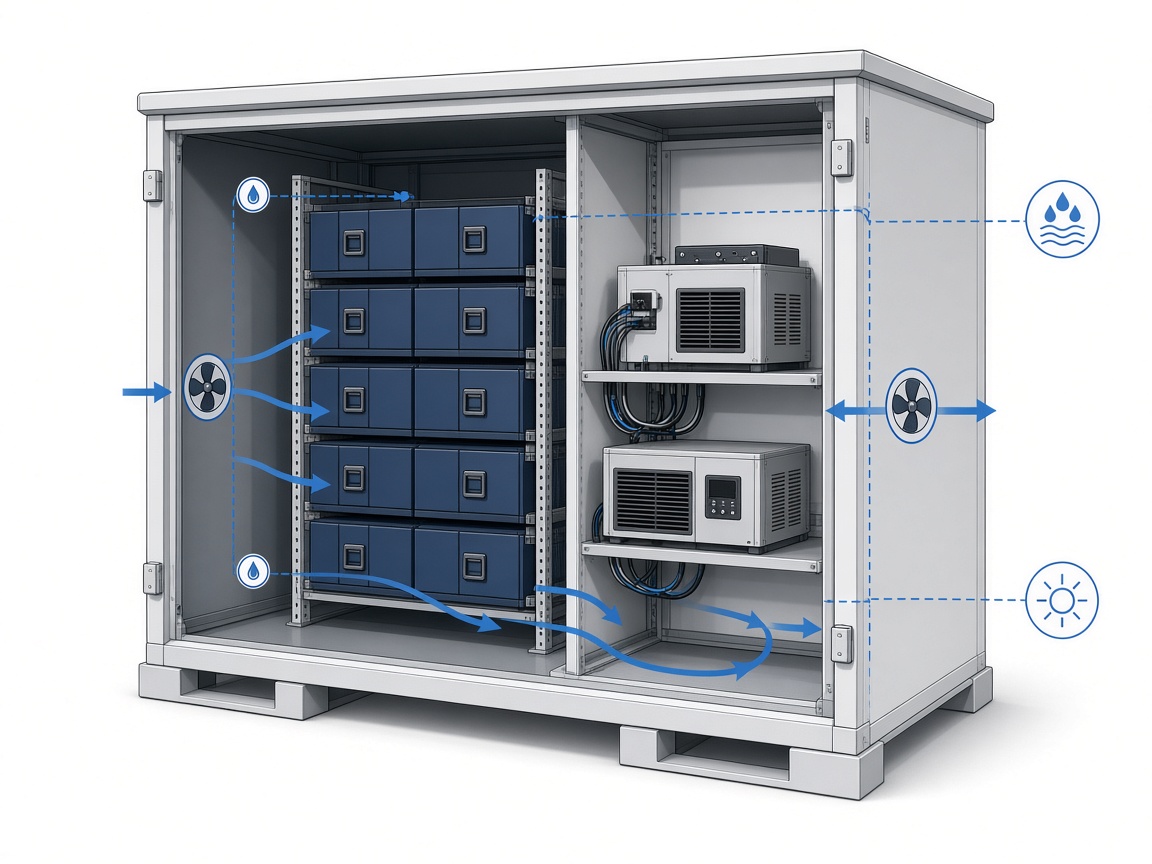
Battery energy-storage systems combine batteries, power conversion equipment, control electronics, communication devices, and protection circuits in a confined space. Heat load can vary quickly with charging and discharging, while outdoor temperature and humidity continue to change.
This representative solution applies to cabinet-based energy storage, power conversion, and battery management enclosures. Product selection must follow the battery manufacturer’s temperature limits, fire-safety requirements, and project standards.
Why enclosure conditions matter
Battery performance and service life are affected by temperature. High temperature accelerates aging. Uneven temperature between modules can cause imbalance. Humidity increases corrosion and insulation risk. Fans and filters may introduce dust or humid air if the ventilation strategy is not matched to the site.
The objective is not only cooling. It is maintaining stable operating conditions across the full charge and discharge cycle.
Conditions to verify
- Battery and power-electronics temperature limits
- Maximum heat load during charge and discharge
- Internal airflow path and module spacing
- Ambient temperature, solar exposure, altitude, and wind
- Humidity, coastal exposure, and washdown requirements
- Required enclosure IP rating and fire-protection strategy
- Available AC or DC power and control voltage
- Alarm, RS485, PLC, or SCADA integration requirements
Recommended NOXT configuration
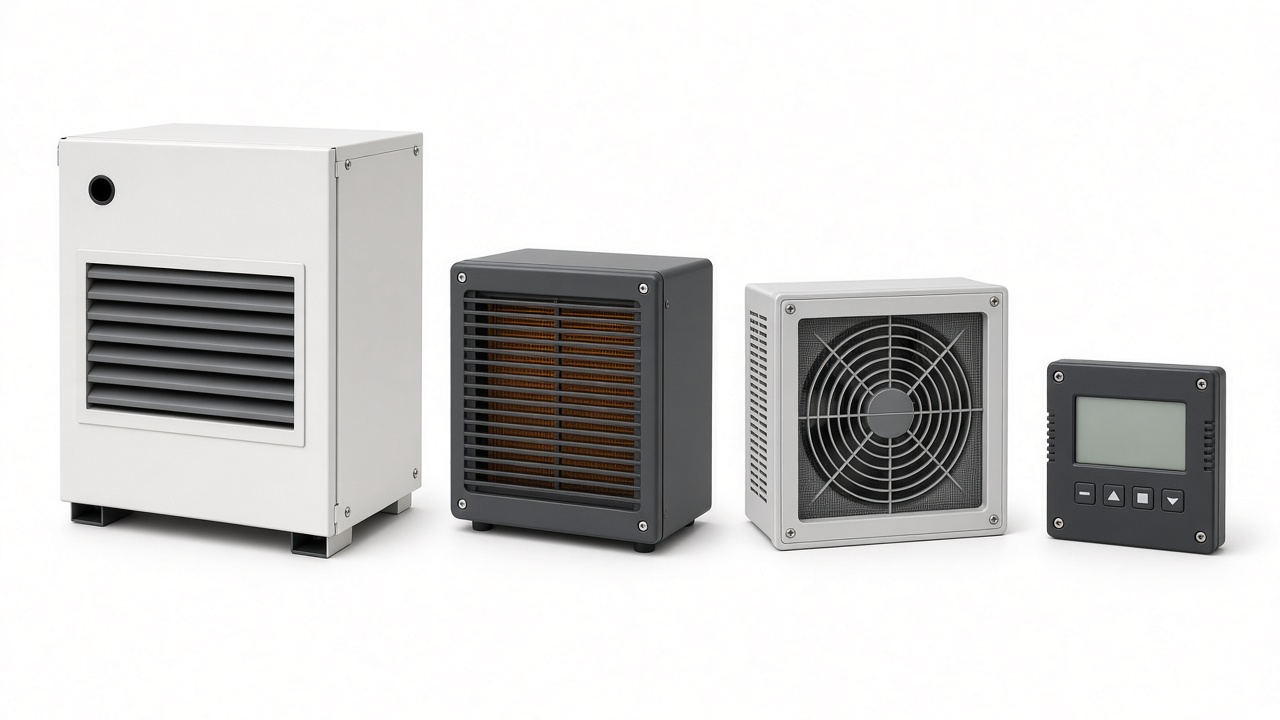
| Function | Recommended product family | Role in the application |
|---|---|---|
| Remove moisture from sealed sections | CZCS 1000A, CZCS 1000AF, or CZCS 960A | Semiconductor dehumidification and condensation control |
| Maintain minimum temperature | HG 140 or HG 340 heater | Prevents cold-start and low-temperature condensation risk |
| Remove heat or balance airflow | TB 98/TB 99 filter fan or F2E roof fan | Supports forced-air cooling where permitted by the enclosure design |
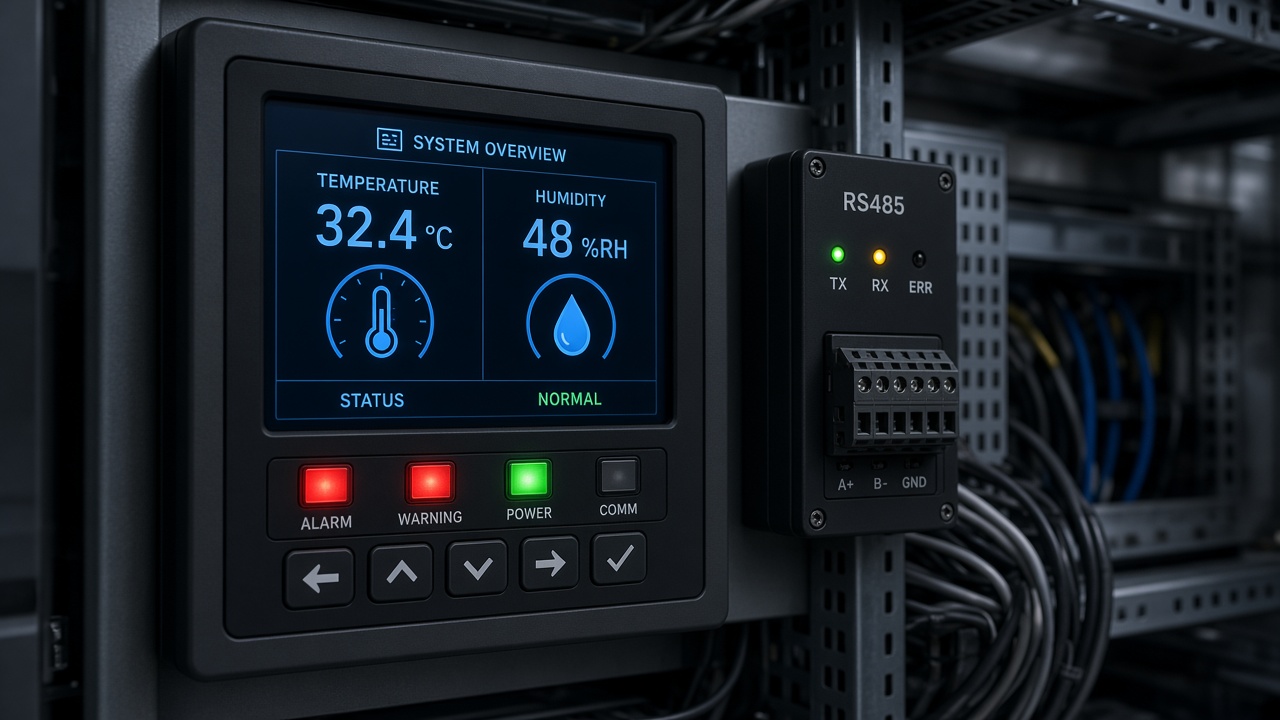
| Control temperature and humidity | ETF 012 or ETY 031 controller | Automates heating, dehumidification, and ventilation |
| Connect to site systems | RS485-compatible controller option | Provides data, status, and alarm integration |
Typical control strategy
- Temperature control keeps the battery area within the specified operating range.
- Humidity control activates dehumidification when moisture risk rises.
- Airflow control starts ventilation only when internal temperature and outside conditions allow it.
- Alarm logic distinguishes high temperature, low temperature, high humidity, fan failure, and communication faults.
- Event data is reviewed to identify charge-cycle trends and seasonal changes.
Selection guidance
A large energy-storage enclosure may need more than one control zone. Batteries, power electronics, and communication equipment can have different temperature limits and airflow requirements.
Heating and dehumidification may be required for sealed sections, while filtered ventilation or active cooling may be needed in high heat-load areas. The design should avoid moving humid air from one compartment into another without considering the dew point.
For critical sites, monitoring should continue even when remote communication is unavailable. Local protection and fail-safe behavior must be defined before the system is commissioned.
Installation and maintenance
- Keep temperature sensors away from direct airflow and high-current conductors.
- Verify airflow paths around batteries and power modules.
- Confirm filter pressure loss and cleaning intervals.
- Check dehumidifier drainage and prevent water from reaching electrical equipment.
- Inspect heater clearances and terminal temperatures.
- Test alarm behavior during commissioning and scheduled maintenance.
- Record setpoints and communication addresses in the project documentation.
Frequently asked questions
It depends on the enclosure design and climate. Cooling manages heat load, while dehumidification controls moisture. In sealed areas, both functions may be required.
Only when the project design and battery requirements allow outside air. Dust, humidity, salt, and contamination must be evaluated.
Uneven temperature can affect battery performance and aging. Airflow and sensor placement should represent the actual module conditions.
RS485-compatible controllers can support integration. The protocol, addressing, data mapping, and fail-safe behavior must be confirmed for each project.

Next step
Provide the battery type, enclosure dimensions, heat load, operating temperature range, power supply, and integration requirements. NOXT can help define a representative climate-control configuration for engineering review.